The Brady List Investigation & Database
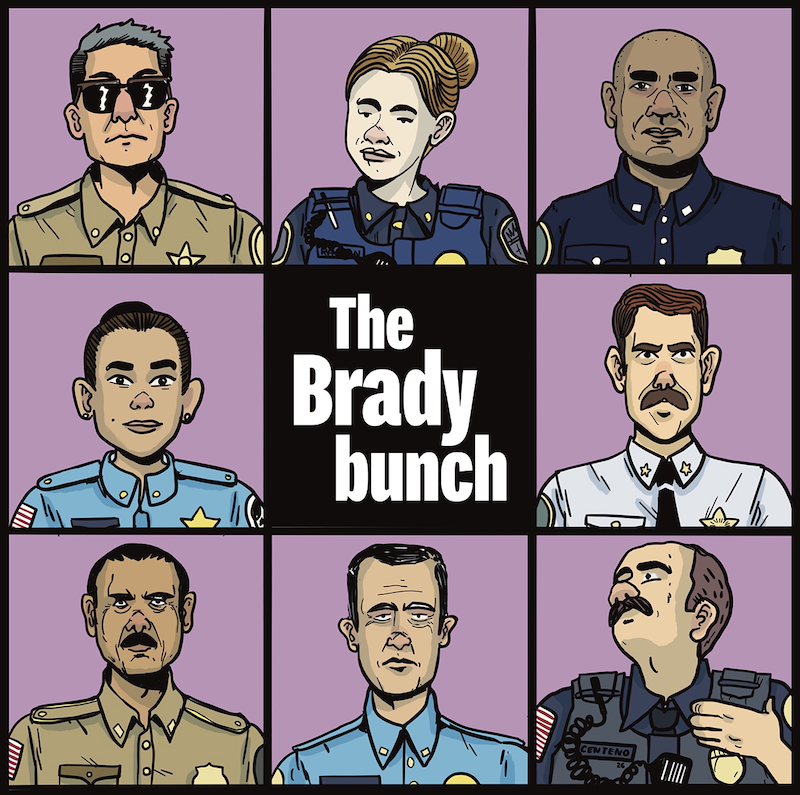
Credit: Mike Centeno for the Chicago Reader
Illinois police officers with credibility issues have made hundreds of arrests and testified in court at least 1,700 times.
Reporting by Max Blaisdell and Sam Stecklow
Published in the Chicago Reader on November 4, 2026
This story was produced as part of the Pulitzer Center’s StoryReach U.S. Fellowship.
More than a thousand Illinois law enforcement officers are named in files held by prosecutors to keep track of dishonest and disreputable cops, according to a new investigation by Invisible Institute.
These files --- commonly referred to as “Brady lists” --- are meant to ensure prosecutors fulfill their constitutional duty to disclose to defendants when officers have been dishonest, biased or committed serious misconduct in the past. The reporting shows, however, that many officers are slipping through cracks in the system.
Failing to do so violates the Constitution, and putting officers known to be violent, prone to lying or prejudiced on the stand without disclosure can lead to the imprisonment of the innocent, the acquittal of the guilty and plea deals with longer sentences than would otherwise have been struck.
Through our investigation, we identified one southern Illinois officer, Anthony Kendrick, who hopscotched between five different police departments across five counties, making arrests and testifying in criminal cases for years before a Gallatin County prosecutor finally noticed that he was dishonest in an official proceeding almost two decades ago.
“I was not made aware of, or have any knowledge of, this Brady issue with Deputy Kendrick until a citizen made a complaint,” Gallatin County State’s Attorney Douglas Dyhrkopp wrote to the public defender’s office in a letter. “Clearly, I was surprised by this.”
Legal experts say it is common nationally, not just in Illinois, for prosecutors to fail to make required disclosures.